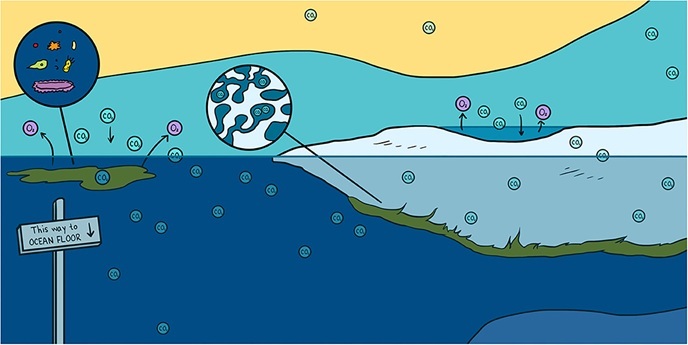
Every residing mobile needs a regular exchange of materials to live and function well. Cells take in oxygen, water, nutrients, and minerals while disposing of waste products such as carbon dioxide (CO₂). This movement of substances is important for growth, energy production, and maintaining the internal balance of the cell.
If you have ever wondered how substances like CO₂ and water pass in and out of the cellular membrane, the solution lies in the right form of the cell membrane and several natural transport strategies. The cellular membrane acts as a selective barrier, allowing sure materials to enter while preventing others from passing freely.
What Is the Cell Membrane?
The cell membrane is a thin, flexible layer that surrounds each cell. It separates the cell’s inner surroundings from the outside world and controls the movement of materials getting into and leaving the cell.
The membrane is referred to as selectively permeable because it lets in asomeolecules to pass via even as blockading others. This selective macontrolllows hit to hold the proper conditions for the cell to perform its functions.
Without the cellular membrane, cells won’t be able to adjust nutrients, water, or waste products correctly.
Why Do Substances Move In and Out of Cells?
Cells constantly trade substances with their environment to live healthily.
Some critical motives encompass:
- Taking in oxygen for respiration.
- Absorbing vitamins for growth.
- Receiving water to keep cell shape.
- Removing carbon dioxide produced throughout respiration.
- Eliminating various waste substances.
- Maintaining the right balance of salts and minerals.
These processes take place constantly to some degree within the life of the cell.
How Does Carbon Dioxide (CO₂) Move In and Out of the Cell?
Carbon dioxide particularly moves through the way of diffusion.
Diffusion is the natural movement of molecules from an area of higher concentration to an area of decrease attention.
Inside actively walking cells, respiration produces carbon dioxide. As the concentration of CO₂ becomes higher in the cell than ooutside the ggastruly diffuses athroughthe cell membrane into the surrounding environment
This method requires no power because the molecules glide along their concentration gradient.
Steps of CO₂ Diffusion
- Cellular respiration produces carbon dioxide.
- CO₂ concentration will increase within the cell.
- The cellular membrane permits CO₂ molecules to pass through.
- CO₂ moves to the place in which its concentration is lower.
- The waste fuel is in the long run eliminated from the frame.
Diffusion is one of the simplest and most efficient techniques of transport in living cells.
How Does Water Move In and Out of the Cell?
Water moves across the cellular membrane with the help of a system referred to as osmosis.
Osmosis is the motion of water molecules via a selectively permeable membrane from an area with a higher water concentration to an area with a lower water concentration.
Unlike diffusion, which may include many types of molecules, osmosis specifically refers to the motion of water.
This system permits cells to maintain the right quantity of water needed for everyday functioning.
Steps of Osmosis
- Water molecules surround the cell.
- The cellular membrane lets water pass.
- Water moves in the direction of the side with lower water concentration.
- The movement continues till balance is achieved.
Osmosis plays an essential function in retaining mobile period and inner strain.
Diffusion and Osmosis: What’s the Difference?
Although both techniques involve passive transport, they are different.
| Feature | Diffusion | Osmosis |
|---|---|---|
| Substance Moved | Any small molecules (e.g., CO₂, O₂) | Water only |
| Membrane Required | Not always | Yes |
| Energy Needed | No | No |
| Direction | High to low concentration | High water concentration to low water concentration |
Understanding this distinction lets us offer a reason behind how different substances circulate across cell membranes.
Other Ways Substances Move Across the Cell Membrane
Besides diffusion and osmosis, cells use numerous other transport techniques.
Active Transport
Sometimes cells want to move substances against their concentration gradient.
This approach is called active transport.
Unlike diffusion and osmosis, active transport requires energy from the cell
Examples embody:
- Absorbing minerals from soil in plant roots.
- Transporting glucose into animal cells.
- Moving ions along the route of nerve cell membranes
Facilitated Diffusion
Some molecules are too huge to pass straight away through the membrane.
Special transport proteins assist these molecules circulate across without the use of cellular energy.
This manner is known as facilitated diffusion.
Importance of Substance Movement
The motion of substances all through the cell membrane facilitates many important lifestyles techniques.
Some important features encompass:
- Cellular breathing
- Photosynthesis in vegetation
- Waste elimination
- Nutrient absorption
- Water stability
- Temperature regulation
- Cell communication
- Growth and repair
Without those transport mechanisms, cells can quickly lose their capacity to function.
Factors That Affect Movement Across the Cell Membrane
Several elements have an impact on how quickly substances move
These embody:
Concentration Gradient
A huge difference in concentration usually increases the rate of diffusion.
Temperature
Higher temperatures increase molecular motion, speeding up diffusion.
Membrane Surface Area
Larger membranes allow more molecules to pass at the same time.
Membrane Thickness
Thinner membranes allow materials to transport more quickly.
Size of Molecules
Smaller molecules typically bypass the membrane more quickly than large ones.
Real-Life Examples
The motion of substances throughout cellular membranes takes place continuously in everyday life.
Examples encompass:
- Oxygen entering red blood cells in the lungs.
- Carbon dioxide leaving body cells after respiration.
- Water moving into plant root cells.
- Nutrients being absorbed within the small intestine.
- Kidney cells filtering waste from the blood.
These examples show how important membrane delivery is for all living organisms.
Why Is the Cell Membrane Called Selectively Permeable?
The cellular membrane does not permit everything to go into or leave freely.
Instead, it carefully controls the movement of substances.
For example:
- Oxygen passes effortlessly.
- Carbon dioxide leaves without trouble.
- Water moves through osmosis.
- Large proteins frequently require specific delivery mechanisms.
- Harmful materials are usually blocked.
This selective behavior protects the mobile on the same time as ensuring it receives the entirety wanted for survival.
Conclusion
Understanding how substances like CO₂ and water bypass outside and inside the mobile permits providing an cause at the back of one of the most important processes in biology. Carbon dioxide leaves cells through diffusion, while water moves with the help of osmosis. Both techniques occur naturally without requiring cellular energy because molecules circulate from regions of higher concentration to lower concentration.
Along with active transport and facilitated diffusion, these delivery mechanisms permit cells to absorb nutrients, get rid of waste, maintain water balance, and help with essential life processes. Wth out them, cells couldn’t live or function well.
Frequently Asked Questions
1. How does carbon dioxide float out of the cell?
Carbon dioxide moves out of the cell through diffusion, travelling from an area of higher concentration in the cell to a lower concentration outside.
2. How does water circulate inside and out of the cell?
Water moves through osmosis, passing across the selectively permeable cell membrane.
3. What is diffusion?
Diffusion is the movement of molecules from an area of higher concentration to a region of decrease attention with out theusee of cell energy.
4. What is osmosis?
Osmosis is the movement of water molecules via a selectively permeable membrane from a higher water concentration to a lower water concentration.
5. Does diffusion require energy?
No. Diffusion is a passive transport mechanism and does not require energy.
6. Why is the cellular membrane referred to as selectively permeable?
Because it lets certain materials pass through while prohibiting others, helping the cell preserve a strong internal environment.
7. What is the distinction between diffusion and osmosis?
Diffusion includes the movement of many types of molecules, on the identical time as osmosis refers especially to the movement of water through a selectively permeable membrane.
